
International Shipping 101: Navigating Global Trade in 2026
Category: Logistics / Shipping Solutions Target Audience: Small to Medium Enterprises (SMEs) and New Importers.
Introduction: The global shipping landscape has fundamentally evolved. With shifting geopolitical trade corridors, increasing cost volatility, and the rapid shift toward digital trade infrastructure, entering international markets is no longer a straightforward execution—it requires a well-defined strategic roadmap.
Today, logistics is not just an operational function. It is a core driver of profitability, cash flow, and competitive positioning. Companies that optimise their logistics strategy gain measurable advantages in cost efficiency, delivery speed, and market responsiveness.
Key Pillars of a Successful Shipment
1. Mastering Incoterms (Beyond the Basics)
Incoterms are often misunderstood as simple trade terms, but in reality, they define the financial, operational, and legal structure of every shipment.
Choosing between terms such as FOB (Free On Board) and DDP (Delivered Duty Paid) has a direct impact on:
• Cost control: Who pays for freight, insurance, duties, and last-mile delivery
• Risk transfer: The exact point where risk shifts from seller to buyer
• Operational visibility: Who controls the logistics chain and selects service providers
• Cash flow timing: When costs are incurred and how they are managed
For example:
• Under FOB, the buyer controls the main freight, often allowing better negotiation on shipping rates and routing.
• Under DDP, the seller assumes full responsibility, offering simplicity to the buyer but often at a higher embedded cost.
In practice, leading companies do not rely on a single Incoterm—they strategically select terms based on market, product type, and internal capabilities. A poor Incoterm choice can result in hidden costs, lack of control, and unnecessary exposure to delays or disputes.
2. Mode Optimisation (A Strategic Lever, Not a Choice)
Transport mode selection is one of the most powerful—and often underestimated—levers in supply chain performance.
Rather than choosing a fixed mode, high-performing organisations continuously optimise based on cost, urgency, product characteristics, and market demand.
Ocean Freight
The backbone of global trade.
Best suited for:
• High-volume shipments
• Stable demand planning
• Cost-sensitive operations
However, it requires strong forecasting and inventory planning due to longer transit times.
Air Freight
A premium option where speed outweighs cost.
Used for:
• High-value FMCG products
• Urgent replenishment
• Market entry or stock recovery situations
While significantly more expensive, it can protect revenue by preventing stockouts or missed opportunities.
Sea-Air Hybrid (Increasingly Strategic)
A growing model combining both modes:
• Goods move via ocean to a transit hub
• Then switch to air for final delivery
This approach offers:
• Faster delivery than full ocean freight
• Lower cost than full air freight
• Greater flexibility in dynamic markets
Advanced Optimisation Approach
Leading companies go beyond mode selection and focus on:
• Route optimisation: Selecting the most efficient corridors based on cost and reliability
• Container utilisation: Maximising load efficiency to reduce cost per unit
• Shipment consolidation: Combining orders to reduce frequency and cost
• Dynamic mode switching: Adjusting transport modes based on real-time demand and disruptions
In many cases, improving mode optimisation directly reduces both logistics cost and carbon emissions, making it a dual financial and sustainability lever.
3. Digitalising Trade Operations (Not Just Documentation)
The industry is shifting from manual, paper-based processes to fully digital trade ecosystems.
Digitalising logistics is not just about replacing documents—it is about increasing speed, reducing risk, and improving transparency across the supply chain.
One of the most impactful developments is the adoption of the electronic Bill of Lading (eBL).
Why eBL Matters
Traditionally, Bills of Lading are physical documents that must be couriered between parties, often causing delays, especially at destination ports.
By adopting eBL, companies benefit from:
• Faster document transfer (instant instead of days)
• Reduced risk of loss, fraud, or delays
• Improved coordination between shippers, carriers, and consignees
• Faster cargo release and reduced port storage costs
Beyond eBL, digitalising trade includes:
• Automated commercial invoicing
• Real-time shipment tracking
• Integrated customs clearance systems
Companies that move early into digital trade systems reduce friction, avoid delays, and gain a significant operational advantage.
Strategic Hubs
Leveraging the right transit hubs is a critical component of an optimised supply chain.
• Dubai serves as a key global gateway, connecting Asia, the Middle East, and Africa, with strong re-export capabilities.
• Rotterdam remains Europe’s primary logistics hub, offering efficient distribution across the EU market.
Using such hubs strategically allows businesses to:
• Reduce transit times
• Improve inventory positioning
• Respond faster to market demand
• Optimise distribution across multiple regions
Conclusion
In today’s environment, international shipping is no longer about simply moving goods—it is about designing a supply chain that is intelligent, flexible, and cost-efficient.
Companies that master Incoterms, optimise transport modes, and embrace digitalisation will not only reduce risk and cost—they will gain a sustainable competitive advantage in global markets.


The financial world has pivoted. In 2026, access to credit and investment is increasingly tied to a company’...

The map of global trade has been redrawn. With shifting geopolitical alliances and new environmental regulatio...

The traditional "Take-Make-Waste" model is officially obsolete. The Circular Economy focuses on keeping produc...

The "Digital Twin" of your supply chain is no longer a futuristic concept. In 2026, Artificial Intelligence (A...
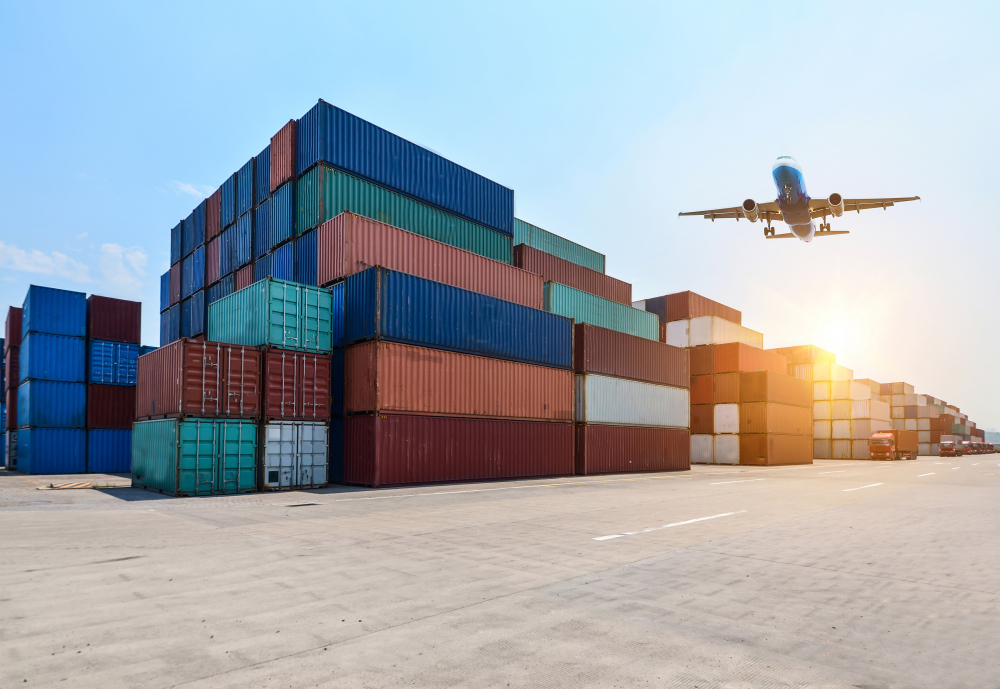
The classic dilemma: Do you need it tomorrow, or do you need it to be cost-effective? In 2026, a third factor ...

Going green doesn't have to happen overnight. For many companies, small, data-driven changes in the supply cha...
We prioritize responding to your inquiries promptly to ensure you receive timely assistance. Please click on any of our global offices on the map to view the full address and contact details.
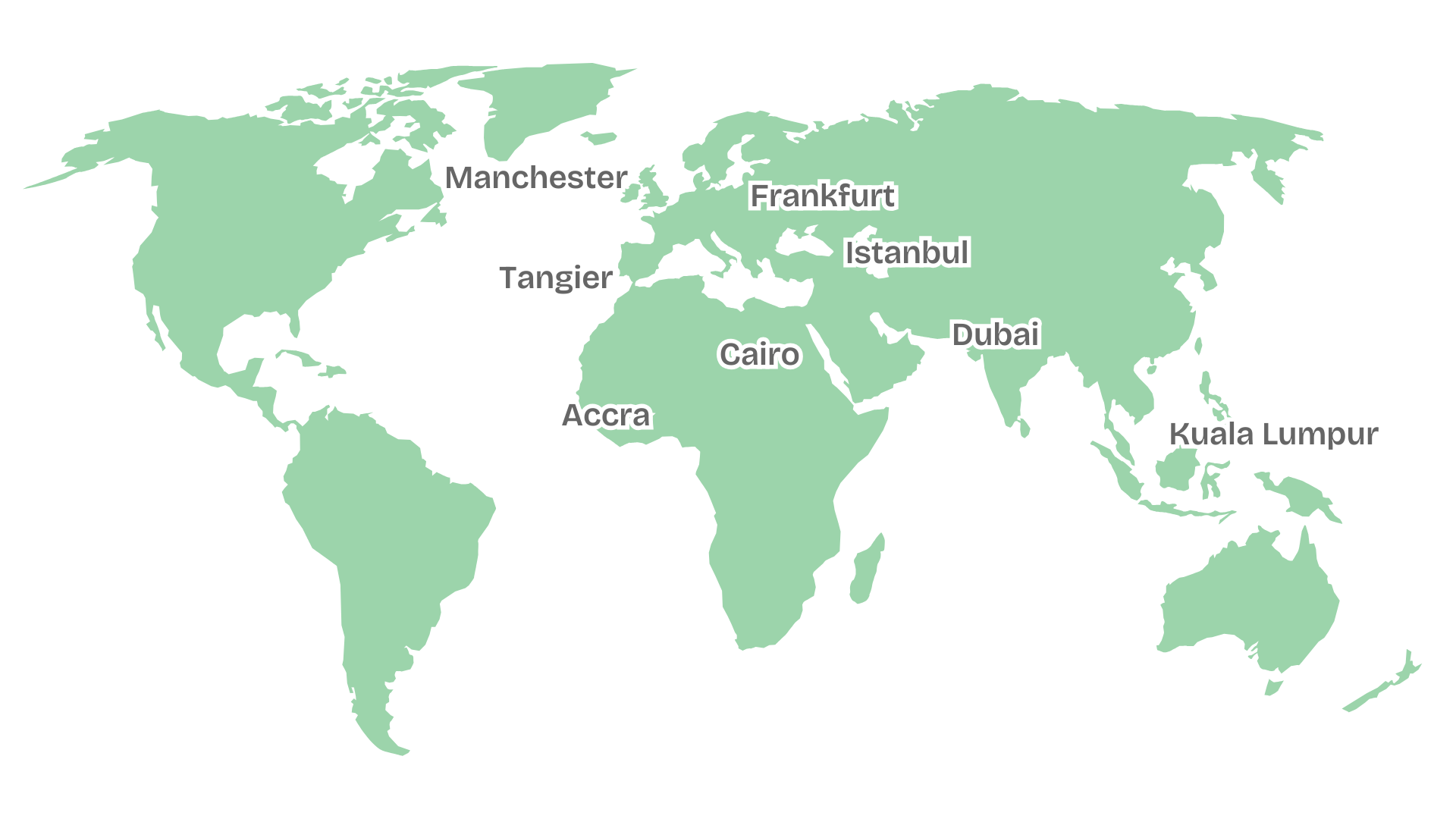
M333HG, United Kingdom.
Germany Office
Süleyman Seba Cad. No.6/4, Beşiktaş, Turkey.
2096-C District, Darnagul Settlement, Narimanov District, Baku AZ1108, Azerbaijan.
AV Yaakoub El Mansour 2, 3éme Étage N 6, Morocco.
Egypt Office
Dubai Investment Park Second, UAE.
13 Lagos Avenue, East Legon, Ghana.
South Africa Office
Contact info
We prioritize responding to your inquiries promptly to ensure you
receive the assistance you need in a timely manner